

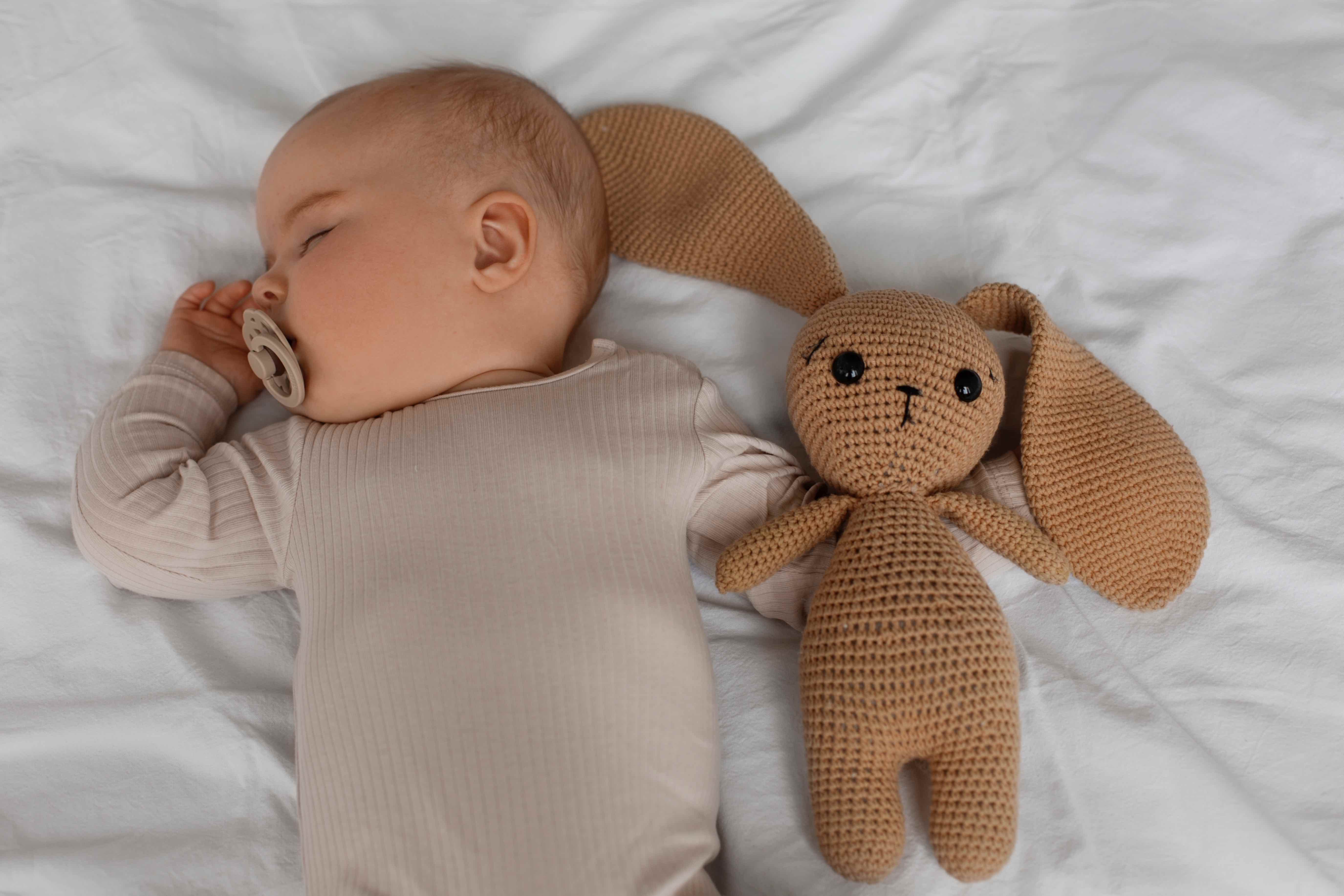
Tracking the development of a newborn and baby involves regular paediatric check-ups during the first year (at 1, 2, 4, 6, 9 and 12 months), when weight, length and head circumference are measured and motor, social and communication skills are assessed. Every baby develops at their own pace, but there are key milestones to reach at certain ages.
Key points:
- The first year is the period of most intensive growth and development
- Babies usually triple their birth weight by 12 months
- Newborn reflexes gradually disappear and are replaced by conscious movements
- Regular check-ups are critical for detecting problems early
What does tracking development in the first year mean?
Tracking the development of a newborn and baby means systematically observing physical growth, motor skills, sensory perception, communication and social interaction during the first 12 months of life. This is the most critical period of development, when a baby goes from a completely dependent newborn to an active little child who can walk, communicate and interact with the world around them.
Physical monitoring involves regularly measuring three main parameters: weight, length (height lying down) and head circumference. These measurements are plotted on special growth charts recommended by the World Health Organization (WHO), which show whether the baby is growing at the expected rate.
Skill development covers several areas: gross motor development (head control, rolling, sitting, crawling, walking), fine motor development (grasping objects, passing them between hands, the pincer grip), visual and auditory development (following with the eyes, reacting to sounds), communication (cooing, babbling, first words), and social and emotional development (smiling, eye contact, separation anxiety).
The paediatrician tracks not only whether the baby reaches certain milestones, but also the pace of development and whether the different areas develop in harmony. A delay in one area doesn’t necessarily mean a problem, but it calls for careful observation and possibly further assessment.
What are normal rates of physical growth in the first year?
The first year is the period of fastest physical growth in a person’s life. Understanding the expected rates helps parents have realistic expectations and recognise possible problems.
Weight in the first year:
The first days after birth: newborns lose about 5-10% of their birth weight due to fluid loss. This is normal and expected. Babies should regain this weight within 10-14 days of birth.
The first 3-4 months: the period of most intensive weight gain. Babies usually gain about 150-200 grams a week. This is the fastest rate, and it gradually slows down.
4-6 months: weight gain slows to about 100-150 grams a week. By 5-6 months, most babies have doubled their birth weight.
6-12 months: weight gain continues to slow. Babies gain about 70-100 grams a week. By their first birthday, most babies have tripled their birth weight.
Example: A baby born at 3.5 kg will probably weigh about 7 kg at 6 months and about 10-10.5 kg at 12 months.
Length (height) in the first year:
The first 6 months: babies grow quickly, about 2-3 cm a month. The total increase in length is about 15-18 cm.
6-12 months: the rate slows to about 1-1.5 cm a month. The total increase is about 8-10 cm.
Over the whole year: babies usually grow about 25 cm from their birth length. A baby born at 50 cm will probably be about 75 cm on their first birthday.
Head circumference:
The first 6 months: the head grows most intensively, about 2 cm a month, reflecting the rapid development of the brain.
6-12 months: the rate slows to about 0.5-1 cm a month.
Over the whole year: head circumference increases by about 12 cm from birth.
Head circumference is an important indicator of brain development. Growth that is too slow or too fast may signal a problem and requires medical assessment.
What are the key milestones month by month?
The first year is full of exciting milestones. Here is roughly what to expect at each age, bearing in mind that individual variation is normal.
Month 1: Newborn (0-4 weeks):
Motor skills: movements are mostly reflexive and uncontrolled. Arms and legs are curled towards the body. When on their tummy, the baby tries to lift their head for a second or two. They reflexively grasp a finger placed in their palm.
Vision: sees best at a distance of 20-30 cm (a parent’s face during feeding). Focuses on faces and strong contrast. Briefly follows moving objects with their eyes.
Hearing and communication: startles at loud sounds. Calms down at familiar voices. Cries to communicate needs (hunger, discomfort, tiredness).
Sleep: sleeps 14-17 hours a day but doesn’t distinguish between day and night. Wakes every 2-3 hours to feed.
Month 2:
Motor skills: lifts the head to 45 degrees when on their tummy. Movements become smoother and less jerky. Begins to open and close their hands consciously.
Social development: the first social smile! The baby starts smiling in response to smiles and voices. Makes eye contact for longer.
Communication: begins to coo (making sounds like “aaa”, “ooo”). Crying becomes more varied depending on the need.
Month 3:
Motor skills: lifts head and chest when on their tummy, propped up on the elbows. Can swipe at a dangling object. Begins to grasp and briefly hold objects placed in the hand.
Visual development: follows moving objects with the eyes from left to right. Recognises faces at a distance. Sees colours more clearly.
Communication: cooing becomes more varied. Begins to imitate sounds. Smiles often and spontaneously.
Month 4:
Motor skills: good head control in all positions. When on their tummy, pushes up on straight arms. May roll from tummy to back. Grasps objects deliberately.
Social development: laughs out loud! Shows excitement during play. May show disappointment when play stops.
Communication: begins to repeat syllables like “ba-ba”, “da-da” and others without meaning. Responds to different tones of voice.
Month 5:
Motor skills: rolls in both directions (tummy to back and back to tummy). Sits with support. Passes objects from hand to hand. Puts everything in the mouth.
Vision: sees clearly across the room. Recognises familiar faces at a distance. Follows fast-moving objects.
Communication: sounds become more varied. Experiments with different sounds and tones.
Month 6:
Motor skills: can sit with minimal support or on their own briefly. Begins rocking back and forth on all fours (preparing to crawl). Grasps small objects with the whole hand.
Social development: recognises the emotions of close family members. May show wariness of strangers (the beginning of separation anxiety).
Communication: responds to their own name. Makes sounds to express happiness or displeasure. Starts to enjoy games like peekaboo.
Feeding: ready for the introduction of solid food (usually between 5 and 6 months).
Month 7:
Motor skills: sits unsupported. Bears weight on the legs when held upright. May start to crawl (some babies crawl later or skip crawling altogether).
Fine motor development: begins to use the thumb against the other fingers (a raking grasp). Bangs objects together.
Communication: sounds start to resemble real words more. Experiments with tone and intonation.
Month 8:
Motor skills: crawls confidently (if they have started). Pulls up to standing by holding on to furniture. May take side steps while holding on to furniture.
Social development: separation anxiety may peak. The baby may cry when a parent leaves the room. Shows clear preferences for certain people.
Communication: begins to understand simple words like “no” and “bye-bye”. Points at things they want.
Month 9:
Motor skills: can sit down from standing on their own. Stands holding on to furniture. Crawls confidently and quickly. Hands over objects when asked.
Fine motor development: good pincer grip (picks up small objects with thumb and index finger). Can put an object into a container.
Communication: understands more and more words. Can wave goodbye. Experiments with different tones and rhythms in sounds that resemble speech.
Month 10:
Motor skills: stands alone for a few seconds. Walks holding a hand or furniture. Climbs stairs on all fours (under close supervision!).
Social development: imitates simple gestures (clapping, waving). Plays simple games like peekaboo actively. Shows a sense of humour.
Communication: says first meaningful words (usually “mama”, “dada”) and sounds more and more like conversation, with intonation and pauses.
Month 11:
Motor skills: stands alone for longer. May take a step or two without support (some babies walk at this age, others later). Bends down from standing to pick up an object.
Fine motor development: can use a cup alone (if clumsily). Loves taking objects out of containers.
Communication: understands simple instructions (“give me the ball”). May say 1-3 words clearly.
Month 12: First birthday:
Motor skills: most babies walk with help or on their own (the normal range is 9-18 months). Climbs onto furniture. May take first steps forward.
Fine motor development: can build a tower of 2 blocks. Can put objects into a container and tip them out. Eats with a spoon (if clumsily).
Social development: shows affection to familiar people. May play simple pretend games (feeding a doll). Shows clear likes and dislikes.
Communication: says 1-3 words consistently and understands many more. Follows simple instructions. Uses gestures to communicate.
What are newborn reflexes and when do they disappear?
Newborns are born with a set of primitive reflexes: automatic reactions that help them survive in the first weeks and months. These reflexes gradually disappear and are replaced by conscious movements. Their presence at birth and their disappearance at the right age are important indicators of healthy neurological development.
Main newborn reflexes:
Sucking reflex: the baby automatically sucks anything placed in their mouth. This reflex is critical for feeding. It gradually becomes a conscious action around 2-4 months, but sucking continues as a skill.
Rooting reflex: when you touch the baby’s cheek, they turn their head towards the touch and open their mouth, looking for food. This reflex helps the baby find the breast or bottle. It disappears around 3-4 months.
Palmar grasp reflex: when you place a finger in a newborn’s palm, they automatically close their fingers and grip tightly. This reflex is so strong that it can hold their whole body weight. It disappears around 5-6 months and is replaced by deliberate grasping.
Moro reflex (startle reflex): at a sudden sound or a feeling of falling, the baby suddenly throws out their arms and legs and then pulls them back towards the body. This reflex protects them when they sense danger. It disappears around 3-6 months.
Stepping reflex: when you hold a newborn upright with their feet on a firm surface, they automatically make “steps”. This reflex usually disappears around 2-3 months, long before the baby is ready to walk on their own.
Babinski reflex: when you stroke the sole of the foot from heel to toes, the toes fan out and the big toe points upwards. This reflex usually disappears between 12 and 24 months and serves as an indicator of normal neurological development.
Tonic neck reflex: when a newborn’s head is turned to one side, they stretch out the arm and leg on that side and bend the opposite ones. This is known as the “fencer’s pose”. It disappears around 5-7 months.
Why does the disappearance of reflexes matter?
The disappearance of primitive reflexes shows that the central nervous system is developing normally and that the baby is moving from reflexive to conscious movements. If the reflexes don’t disappear at the expected age or are absent at birth, this may signal a neurological problem and requires medical assessment.
When should we be concerned about a baby’s development?
There are specific red flags that require an immediate consultation with a paediatrician. Parents should know which signs are concerning at different ages during the first year.
Red flags at any age:
Loss of skills already gained: if the baby stops doing something they could do before (for example, stops smiling, cooing or rolling), this always requires medical assessment.
Very floppy or very stiff muscle tone: a baby who is extremely limp, like a “rag doll”, or conversely, too tense and rigid.
No reaction to sounds or visual stimuli: may signal a hearing or vision problem.
Red flags by age:
By 2 months:
- Cannot lift the head at all when on their tummy
- Does not react to loud sounds
- Does not make eye contact
- Shows no reaction to faces
By 4 months:
- Does not smile at people
- Does not follow moving objects with the eyes
- Makes no sounds (cooing)
- Does not grasp objects at all
- Does not hold the head up independently
By 6 months:
- Does not roll in either direction
- Does not laugh or make happy sounds
- Does not pass objects between hands
- Seems very stiff or very floppy
- Shows no attachment to close family members
By 9 months:
- Does not sit unsupported
- Does not bear weight on the legs with help
- Does not “talk” (ba-ba, da-da, ma-ma)
- Does not respond to their own name
- Shows no interest in people or toys
By 12 months:
- Does not crawl in any way (many babies skip crawling, but they should have another way of getting around)
- Does not pull up to standing
- Does not point
- Does not say a single meaningful word
- Does not use gestures (waving, shaking the head)
- Shows no interest in interactive games
Other warning signs:
Growth stalling: a baby who doesn’t gain weight or grow for several months.
Marked asymmetry: a baby who always uses only one hand or always turns their head to one side.
Lack of social interaction: a baby who avoids eye contact, isn’t interested in faces and doesn’t respond to voices.
Regression after illness or vaccination: if the baby falls significantly behind in development after an illness.
Important: One missed milestone doesn’t automatically mean a problem. But several missed milestones, or a gut feeling that something isn’t right, always deserve a medical consultation. Early intervention gives excellent results if there is a problem.
How can we support a baby’s healthy development?
Parents play a critical role in encouraging healthy development during the first year. Here are practical ways to support your baby at different ages.
Encouraging motor development:
Tummy time is critical for strengthening the muscles of the neck, back and shoulders. Start from the first days with short periods (2-3 minutes) several times a day. Gradually increase to at least 30 minutes in total per day by 3 months. Get down to the baby’s level and use mirrors or high-contrast toys for motivation.
A safe environment to explore: when the baby starts rolling and crawling, provide a safe space on the floor with no hazardous objects. The more free movement, the better the motor development. Avoid too much time in a baby seat, bouncer or carrier.
Support without pressure: help the baby practise new skills (sitting, standing), but don’t hold them in positions they aren’t ready for. The baby will reach the milestones when they are physically ready.
Encouraging sensory development:
Visual stimulation: newborns see best at a distance of 20-30 cm. Keep your face at this distance during play and feeding. Use high-contrast (black and white) toys in the first months. After 3 months, introduce colourful toys and objects with different textures.
Auditory stimulation: talk to your baby all the time. Describe what you are doing, sing songs, read rhyming books. Different sounds (bells, music, nature sounds) stimulate hearing. Avoid loud background noise (a TV left on).
Tactile stimulation: gentle massage and touching different textures (a soft blanket, a smooth toy, a soft brush) help develop the senses. After 6 months, let your baby touch food and explore safe household objects.
Encouraging language development:
Talk to your baby constantly, even when they are very young. Describe what you are doing: “Now I’m going to change your nappy”, “Can you see the dog?”. Use different intonations and tones.
Respond to your baby’s sounds: when your baby coos, reply with the same sounds, and do the same with their other sounds. This sets up a pattern of two-way communication.
Read books every day, even from the earliest age. High-contrast books with simple pictures, and later books with textures and moving parts. Point to the pictures and name them.
Sing songs and rhymes: rhythmic sounds help language develop. Songs with actions (such as “Pat-a-cake”) combine language and movement.
Social and emotional development:
Respond quickly to your baby’s needs: when your baby cries, respond. This builds security and attachment; it doesn’t “spoil” the baby, as some people believe.
Eye contact and physical contact: cuddles, kisses, stroking and carrying your baby create a strong emotional bond.
Predictability and routine: a regular daily routine helps the baby feel secure and anticipate what will happen.
Interactive play: play peekaboo, clap hands, wave goodbye. These games teach interaction and social rules.
How important is sleep for a baby’s development?
Sleep is critically important for physical growth, brain development and consolidating new skills. Babies who sleep well usually develop better in all areas.
Sleep needs by age:
Newborns (0-3 months): sleep 14-17 hours a day, spread over many short periods of 2-4 hours. They don’t distinguish between day and night at first. Babies wake often to feed.
3-6 months: sleep 12-16 hours, gradually consolidating night-time sleep into longer stretches. They start taking 2-3 naps during the day.
6-12 months: sleep 12-14 hours, including 2 daytime naps. Many babies can sleep through the night (5-6 hours without waking) by 6 months, but individual variation is large.
Signs of tiredness in babies:
Rubbing the eyes, pulling the ears, staring, losing interest in toys, irritability, a glazed look. It is important to catch these early signs and put the baby to sleep before they become overtired, which makes it harder to fall asleep.
Safe sleep:
Always put your baby to sleep on their back: this reduces the risk of sudden infant death syndrome (SIDS). Don’t put the baby to sleep on their tummy or side.
A firm mattress in a cot: no pillows, thick covers or soft toys in the cot during the first year.
Share a room, not a bed: it is recommended that the baby sleeps in their own cot in the parents’ room for at least the first 6 months.
Sleep regressions:
Babies often go through temporary sleep regressions around 4 months, 8-10 months and 12 months, coinciding with big developmental leaps. These periods are temporary and settle after 2-4 weeks.
Frequently asked questions about baby development
My baby is 6 months old and still not rolling. Should I be worried?
The normal range for rolling is between 3 and 7 months. If your baby is 6 months old and not rolling yet, but shows other signs of good motor development (good head control, starting to push up on the arms), they will probably reach this milestone soon. However, if there are other delays or the muscle tone is very floppy or very stiff, consult a paediatrician.
My baby is 10 months old and still not babbling. Is that normal?
Most babies start babbling between 6 and 9 months. If your baby is 10 months old and not babbling, this is a red flag, especially if they don’t use other forms of communication (gestures, eye contact, cooing). Consult a paediatrician for an assessment of hearing and language development. Early intervention with a speech therapist can help significantly.
Should we teach our baby to sit or walk?
No active “teaching” is needed. Your baby will reach these milestones naturally when their muscles and nervous system are ready. You can help by providing a safe environment to practise and opportunities to move. It is not recommended to hold the baby in positions they aren’t ready for (for example, sitting before they can sit on their own).
Is it normal for a baby to regress in some skills while learning something new?
Yes, this is completely normal. When the baby focuses their energy on a new skill (crawling, for example), they may temporarily regress in another area (such as sleep or feeding). Once they master the new skill, the other areas return to normal.
How much screen time is safe for a baby?
Experts recommend no screen time for children under 18 months (except video calls with family). Screens don’t help babies develop and can get in the way of the face-to-face interaction that is critical for learning.
Conclusion: enjoy your baby’s unique development
The first year is full of incredible changes and milestones. Every baby develops at their own pace within a wide normal range. Some babies walk at 9 months, others at 15 months, and both are completely normal.
Instead of comparing your baby with others, focus on their individual progress. Track whether they are moving forward and gaining new skills, not whether they are “more advanced” than the neighbour’s baby.
Regular paediatric check-ups are your best tool for tracking development. Trust the paediatrician’s professional assessment, but also listen to your parental intuition. If something worries you, don’t hesitate to share it with the doctor.
The first year goes by incredibly fast. Enjoy every stage, even the difficult ones: soon you will have an active little child running everywhere!
*This article is for information only and does not replace professional medical advice, diagnosis or treatment. Developmental milestones are general guidelines, and individual variation is normal and expected. Not all babies reach every milestone at exactly the ages given. Always consult a qualified paediatrician to assess your own baby’s development. If you have concerns about delayed development or missed milestones, don’t put off a medical consultation.
Sources:
- World Health Organization (WHO), Child Growth Standards and Developmental Milestones
- Centers for Disease Control and Prevention (CDC), Developmental Milestones for Infants
- American Academy of Pediatrics, Guidelines for Health Supervision